Why Your Cat or Dog Needs a Veterinary Dental X-Ray
Why Your Cat or Dog Needs a Veterinary Dental X-Ray
If you have ever wondered why your veterinarian recommends dental X-rays for your dog or cat, you are not alone. Many pet owners in Vienna and surrounding communities are surprised to learn just how much is hidden beneath the surface of their pet’s teeth and gums. At Animal Dental Clinic, located at 410 Maple Avenue West, Suite #1, Vienna, VA 22180, our team specializes in advanced veterinary dental care, including digital oral radiology. This specialized imaging allows us to detect issues that would otherwise go unnoticed during a standard dental exam, ensuring your cat or dog receives the most thorough care possible. In this blog, we will explore why dental X-rays are such a critical part of diagnosing and treating dental disease in pets, what they reveal about your animal’s oral health, when they are needed, and how they support safer, more effective treatment.
Recognizing the Hidden Signs: When Does Your Pet Need a Dental X-Ray?
Cats and dogs are masters at hiding discomfort, which means dental issues often go undetected until they become severe. As a pet owner, you might notice subtle changes such as bad breath, reluctance to eat hard food, dropping kibble, or pawing at the mouth. Other clues can include swelling along the jawline, visible tartar or discoloration, bleeding gums, or even sudden behavioral changes like withdrawing from play or social interactions. Sometimes, the only sign is a vague reduction in energy or appetite. Unfortunately, many of the most serious dental problems are invisible to the naked eye. Tooth root abscesses, bone loss, fractures below the gumline, and resorptive lesions can progress painlessly until they become advanced.
A comprehensive dental evaluation at a specialty practice like Animal Dental Clinic often includes a physical oral exam and a discussion of your pet’s history. However, even the most skilled veterinary dentist cannot see what is happening beneath the surface without specialized imaging. This is where digital dental X-rays come in, allowing us to detect early or hidden problems that are otherwise impossible to diagnose. If your veterinarian has recommended a dental X-ray, it is likely because they have noticed subtle signs or risk factors that warrant a closer look. For example, if your cat is suddenly reluctant to eat or is pawing at their mouth, this can be an early indicator of a condition such as feline tooth resorption. You can find more information about these warning signs on our feline tooth resorption resource page.
Why Dental Diseases Stay Hidden: Understanding the Underlying Causes
Dental disease is one of the most common health issues affecting cats and dogs, yet it can be deceptively silent. Plaque and tartar accumulate above and below the gumline, creating an environment where bacteria can thrive. Over time, this bacterial buildup leads to gingivitis, periodontal disease, and even infection of the tooth root or jawbone. In cats, conditions like tooth resorption frequently begin deep within the tooth and progress outward, making them invisible without X-ray imaging. Dogs are prone to fractured teeth from chewing on hard objects, and these fractures often extend below the gumline, where they cannot be seen during a routine visual exam.
Other contributing factors include genetic predispositions, certain diets, retained baby teeth, and previous oral injuries. Because more than half of each tooth lies beneath the gumline, nearly 60 percent of dental problems are hidden from view. Without imaging, issues such as abscesses, cysts, retained roots, and bone loss can remain undetected until they cause significant pain or systemic illness. Veterinary dental X-rays, and advanced options like digital oral radiology, allow our team to visualize these hidden structures with exceptional detail. This technology is especially important for accurately diagnosing and staging dental disease, planning treatment, and monitoring healing after procedures.
How Veterinary Dental X-Rays Support Effective Treatment
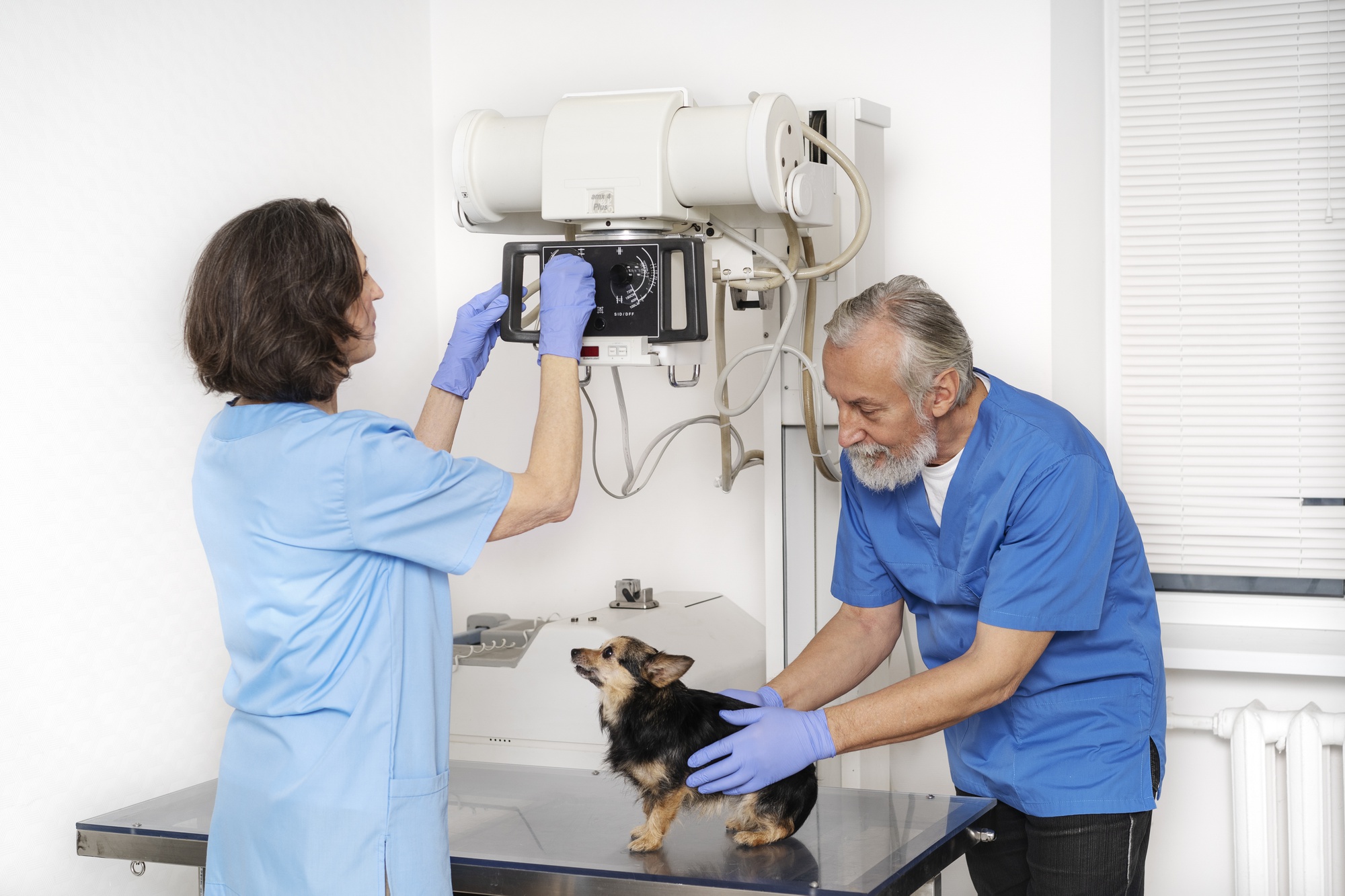
When a dental problem is suspected or diagnosed during a physical exam, a veterinary dental X-ray is the next step in forming a complete picture of your pet’s oral health. The digital X-rays performed at Animal Dental Clinic provide high-resolution images of the teeth, roots, and surrounding bone. With this information, our veterinary dental team can identify the extent of disease, locate hidden infections, and determine the best course of treatment. For example, if a tooth appears damaged, the X-ray can reveal whether the root is involved or if the tooth can be saved with an endodontic procedure, such as a root canal.
In cases where extraction is necessary, dental X-rays guide our veterinarians in safely removing the tooth and ensuring no fragments or retained roots are left behind. This reduces complications and supports faster healing. For pets with complex or recurring dental issues, advanced imaging such as CBCT scans may be recommended. These three-dimensional scans provide even more detailed information for surgical planning or the creation of custom prosthodontics.
Dental X-rays are also essential after any major dental procedure. Post-treatment images confirm that all diseased tissue has been removed and that the healing process is progressing as expected. By using digital radiology, we minimize radiation exposure and obtain instant results, allowing for real-time decision-making during your pet’s procedure.
Preparing Your Pet for Dental X-Rays: What to Expect
Many pet owners are understandably concerned about the safety and comfort of their pets during dental procedures. At Animal Dental Clinic, we perform all dental X-rays under general anesthesia to ensure your cat or dog is still, comfortable, and stress-free. Anesthesia is necessary because pets cannot reliably hold still or tolerate the placement of X-ray sensors in their mouths while awake. This approach not only protects your pet’s wellbeing but also allows our team to obtain the most accurate images possible. For a deeper understanding of why anesthesia is an essential part of safe and effective dental care, you can read our detailed anesthesia information page.
During your visit, our team will conduct a pre-anesthetic evaluation to assess your pet’s suitability for anesthesia and minimize any risk. Modern anesthetic protocols are highly individualized, taking into account your pet’s age, health status, and any underlying conditions. Once your pet is anesthetized, we complete a thorough oral examination, capture digital dental X-rays, and discuss our findings with you before proceeding with any necessary treatments.
Protecting Your Pet’s Smile: At-Home Care and Prevention
While dental X-rays are a powerful diagnostic tool, prevention remains the cornerstone of lifelong oral health. Regular home care is key to reducing plaque buildup and minimizing the risk of dental disease. Brushing your pet’s teeth daily with a veterinarian-approved toothpaste is one of the most effective strategies. If your cat or dog is resistant to brushing, dental diets, treats, and toys designed to promote oral health can offer additional support. Monitoring for warning signs such as bad breath, red or bleeding gums, difficulty eating, or swelling along the jaw can help catch issues early.
It is also important to schedule routine dental evaluations with your primary care veterinarian, who may refer you to a specialty practice like Animal Dental Clinic for advanced diagnostics or treatment as needed. Comprehensive dental care often involves a collaborative approach between your regular veterinarian and our specialty team, ensuring your pet receives the highest standard of care at every stage of their life.
When Should You Seek Specialized Veterinary Dental Care?
If you notice any of the warning signs discussed earlier, or if your veterinarian has recommended a dental X-ray or advanced dental treatment, it is important not to delay care. Dental disease can progress quickly in cats and dogs, leading to pain, tooth loss, and even systemic health problems affecting the heart, kidneys, or liver. Some cases, such as fractured teeth, oral tumors, or suspected resorptive lesions, require prompt and specialized attention. Our veterinary dental team at Animal Dental Clinic works closely with referring veterinarians to ensure your pet receives timely, expert care.
Specialty practices like ours are equipped to handle complex dental and oral surgical cases, provide advanced imaging, and offer treatment options not available in general practice settings. If you are searching for a dental specialty vet near me in Vienna or the surrounding area, Animal Dental Clinic is here to help.
Trust Animal Dental Clinic for Advanced Dental Care in Vienna, VA
Your cat or dog’s oral health is a vital part of their overall wellbeing. Dental X-rays are an essential tool for detecting hidden problems, guiding effective treatment, and protecting your pet’s comfort and quality of life. At Animal Dental Clinic, our veterinary dental specialists are dedicated to providing the highest level of care using advanced digital radiology and the latest techniques. If you have concerns about your pet’s teeth or have been referred for a dental evaluation, we invite you to schedule a consultation with our experienced veterinary team.
To learn more about our comprehensive dental services or to book an appointment, call us at (703) 451-8900 or visit our Vienna location. For more information on our advanced digital oral radiology or comprehensive oral health assessment and treatment, please explore our website. When searching for a dental specialty vet near me, trust our team to provide exceptional care for your pet’s smile—today and for years to come.
All medical information provided here is for general educational purposes only and does not replace a consultation with a veterinary professional. If you have specific concerns about your cat or dog’s oral health, please contact our team directly.